If you keep a few hens in the back garden, sooner or later you will ask the question: how many eggs should they be laying? And a little later, usually in October, the harder one: why have my hens stopped laying?
There is no single number that fits every flock. Breed, age, daylight, moulting, diet and stress all play a part. This guide explains what is normal in general terms for UK keepers, what tends to cause a drop, and how keeping a simple daily record helps you tell a seasonal dip from a real problem.
How many eggs do chickens lay?
Chickens do not all lay at the same rate. The type of bird makes the biggest difference, and the figures quoted on breed websites describe good conditions, not a typical garden coop in January.
Hybrid layers
Birds sold as hybrid or commercial-type layers have been bred to lay often. In their first full season they may produce an egg on most days. They are the usual choice if you want a steady supply, but they tend to slow down sooner than slower-maturing breeds.
Heritage and pure breeds
Traditional pure breeds usually lay fewer eggs, often with longer breaks, but many keepers choose them for temperament, appearance and longevity. Some lay well through the main season and then stop for a good part of the winter. Expect noticeably fewer eggs than from a hybrid.
Bantams
Bantams lay smaller eggs and, in general, fewer of them. Some are also very prone to going broody, which stops laying while they sit.
Why a comparison with a book figure can mislead
Two hens of the same breed can lay quite differently, and the same hen will vary from month to month. The more useful benchmark is your own flock: how many eggs it normally gives in spring, summer and winter. That is only possible if you have been counting.
Why laying changes through the year
Daylight
Hens respond to day length. As the days shorten in autumn, laying slows, and in the UK it is common for production to fall away in the darkest months. As days lengthen again in late winter and spring, most flocks pick up. Some keepers add gentle artificial light to extend the day, but this is a welfare decision as much as an egg one, and hens benefit from a proper rest, so think carefully before doing it.
Moulting
Once a year, usually from late summer into autumn, hens replace their feathers. Growing a full set of new feathers takes a lot of protein, and laying often stops until it is finished. You will see feathers all over the run, bare patches and a scruffy-looking bird. It can last for weeks and tends to hit different hens at different times, so egg numbers fall gradually rather than all at once. A good-quality layers feed, and sometimes extra protein, helps them through it.
Age
Pullets begin laying some months after hatching, and their first eggs may be small or irregular. Production is generally best in the first couple of years, then declines gradually, with longer breaks and fewer eggs each season. An older hen laying less is not a health problem in itself. Many keepers happily keep hens well past their peak.
Stress and health: the causes that need a closer look
Seasonal dips, moulting and age are normal. Other causes of a drop are worth investigating promptly.
Stress and disruption
- A predator, or even a fox seen near the run, can unsettle a flock for days.
- Introducing new birds or changing the pecking order.
- Moving the coop, changing the run or being handled more than usual.
- Very hot or very cold weather.
- Rats or mice taking feed, or disturbing the birds at night.
Feed, water and housing
Hens need a complete layers feed, constant access to clean water, and grit where they do not free-range. A dirty or empty drinker, a change of feed or too many treats can all affect laying. Make sure the coop is dry, ventilated and big enough for the number of birds.
Broodiness
A broody hen stays on the nest, fluffs up and may growl when you reach under her. She will not lay while she sits. Some breeds do this much more than others.
Hidden nests
If the hens are free-ranging, they may simply be laying somewhere you have not looked, such as under a hedge or in a shed. Check before assuming there is a problem.
Parasites and illness
Red mite, lice and worms can all reduce laying and condition. A hen that is lethargic, thin, has a pale comb, laboured breathing, diarrhoea or soft-shelled eggs needs attention. This guide is general information only. If a hen seems unwell, or several seem ill at once, speak to a vet who treats poultry. Keepers in the UK should also follow the current Defra and APHA guidance on notifiable diseases such as avian influenza, including any housing measures in force in your area.
Why tracking daily eggs shows problems early
Most keepers notice a problem only when the egg box is clearly empty. By then the cause may have been in place for a week or two. A daily count changes that.
It is simple. Write down the number of eggs each day, either in a notebook on the coop door or in an app. After a few weeks you have a baseline, and a few useful things become visible:
- A sudden drop across the flock points to something that has just changed: a scare, a predator, a feed or water problem, or the weather.
- A slow slide over several weeks usually fits daylight, moulting or ageing.
- A drop that does not match the season, compared with the same time last year, is worth a closer look at the birds.
- Eggs per hen gives you a rough view of how well each bird is doing, so you can see who is a reliable layer and who has gone quiet.
The same notes are useful if you ever need to describe a problem to a vet. “The flock has laid fewer eggs every day since the 12th and two hens look hunched” is far more helpful than “they’re not laying much”.
Keep health notes alongside the count
Record anything out of the ordinary on the same day: a hen moulting, a treatment you gave, a change of feed, a predator sighting. Patterns that are hard to see in your head are obvious on a page.
Tracking eggs with an app
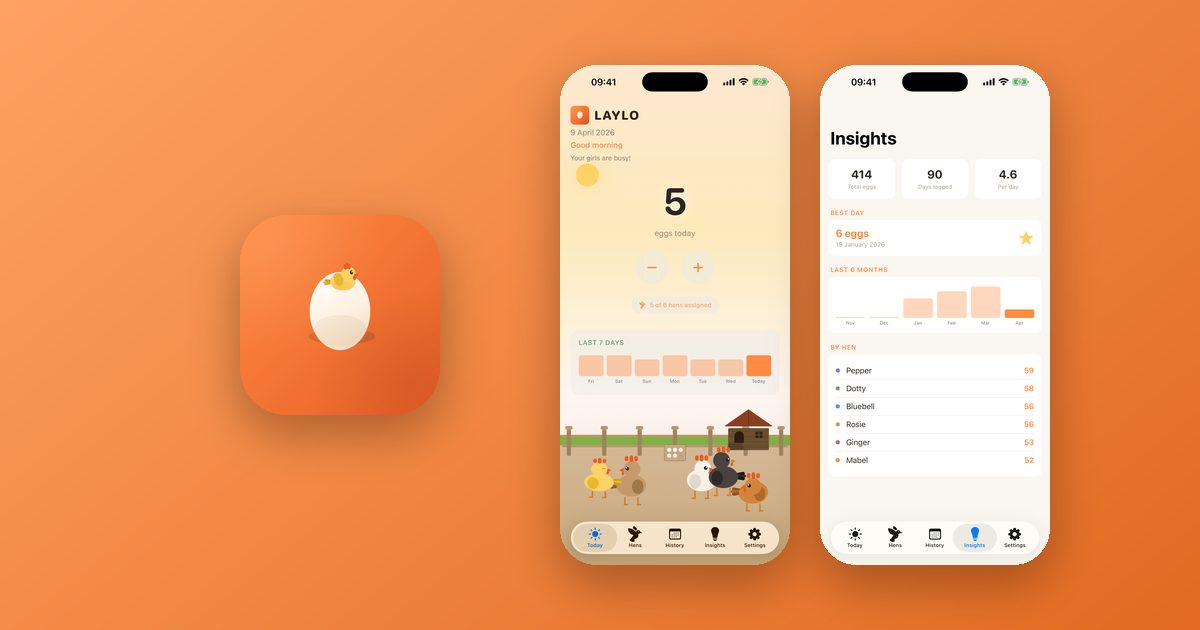
A notebook works perfectly well. If you would rather use your phone, we built Laylo, a free iPhone and iPad egg tracker for backyard chicken keepers. You log the day’s eggs with a tap, add each hen with her breed and hatch date, and see a seven-day trend. There is also a health diary for treatments, supplements and observations, plus egg totals, averages and monthly charts, so you can compare this autumn with the last one. The UK version also fetches public avian influenza alerts from APHA.
Laylo is free to download for up to three hens, with a one-time Pro upgrade for larger flocks and extras such as iCloud sync. The free version shows banner ads, and the app’s privacy policy explains what that involves. It is no substitute for a vet, and the advice in this article is general: Laylo records what is happening, it does not diagnose anything.
A simple routine to start with
- Count and record eggs once a day, at roughly the same time.
- Note any changes to feed, housing, weather and flock members.
- Look at your birds regularly: comb colour, weight, feathers, droppings, energy.
- Review the trend weekly, and compare with the same period last year when you have the data.
- If a drop is sudden, unexplained or comes with signs of illness, speak to a vet.
Frequently asked questions
How many eggs does a hen lay a week?
It depends on breed, age and the time of year. A healthy young hybrid layer in good conditions may lay most days, while heritage breeds, bantams and older hens lay less often. Rather than comparing your hens with a figure from a book, work out what your own flock normally produces in each season and watch for changes from that.
Why have my hens suddenly stopped laying?
The most common reasons are shorter daylight in autumn and winter, a moult, stress or disturbance, a hen going broody, and age. Check for hidden nests, a predator or rodent problem, changes to feed, water or housing, and signs of mites or lice. If hens also look unwell, or several seem ill at once, speak to a vet.
Do hens lay eggs all year round?
Not usually. Laying is strongly influenced by day length, so most flocks slow down or pause over winter, and many pick up again as days lengthen in spring. Some hens, especially younger ones, keep laying through a mild winter, but a seasonal dip is normal.
How can I tell which hen has stopped laying?
If you only count eggs for the whole flock, you can't tell directly. Look for hens that are broody, moulting, thin, pale in the comb or spending long periods away from the nest box, and consider recording which hen laid which egg where you can, for example with distinctive egg colours. Keeping a daily record also helps you spot who has gone quiet over time.
Laylo is an independent app built by D4N LTD, a UK-based software studio, and is not a veterinary service. For anything about the health of your birds, speak to a vet.